Trump, Xi, and Putin Hold Historic Trilateral Summit in Shenzhen
The unprecedented meeting between the leaders of the U.S., China, and Russia focused on global stability and the war in Ukraine.
Associated Press, Axios, Al Jazeera +2
Updated · 2 min read

Overview
U.S. President Donald Trump, Chinese President Xi Jinping, and Russian President Vladimir Putin held a historic trilateral summit in Shenzhen, China, on the sidelines of the APEC summit. While the meeting was largely symbolic and produced no major breakthroughs, it marked a significant diplomatic moment as Xi positioned China as a central force for global stability.
Following the trilateral talks, Trump engaged in a sideline meeting with Putin to discuss ending the war in Ukraine. Meanwhile, European leaders gathered in Berlin to assert their role in any future peace negotiations, expressing concern over being excluded from great-power diplomacy.
Diplomatic Symbolism in Shenzhen
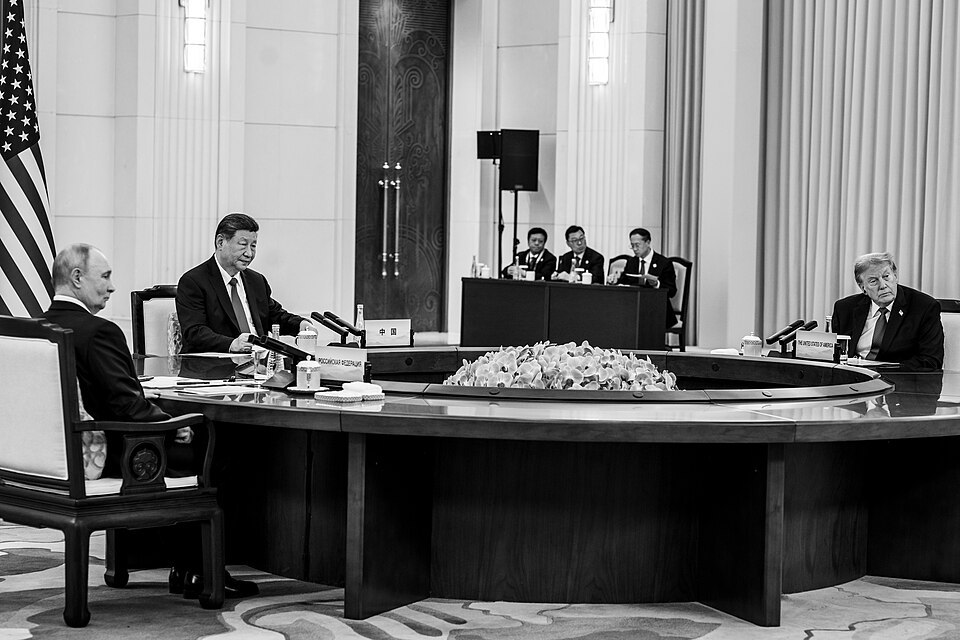
The summit featured the three leaders seated at a large round table with President Xi at the center, an image analysts suggest was intended to project Beijing's growing global influence. Xi emphasized that harmony between major powers is essential for world peace, evoking the cooperation of the three nations during World War II. Despite the high-profile optics, the meeting lasted just over an hour and concluded without a joint statement or significant policy breakthroughs.14
Trump's Push for a Ukraine Deal
During an unscheduled sideline meeting, Trump referred to Putin as his "friend" and expressed optimism that the Russian leader is ready to reach a deal to end the war in Ukraine. Trump's envoys, Jared Kushner and Steve Witkoff, attempted to reassure allies that the U.S. does not intend to impose a deal unilaterally. Kushner also indicated that Russia might be becoming comfortable with security guarantees for Ukraine based on NATO-like principles.236
European Response and the Berlin Meeting
European leaders of the "Coalition of the Willing" met in Berlin to signal a united front, with German Chancellor Friedrich Merz dismissing the Shenzhen summit as a "photo op." Merz and British Prime Minister Andy Burnham insisted that any peace agreement must involve Europe and Ukraine to be successful. While Putin has previously rejected a European role in talks, he recently stated that Russia is not against the idea but wants to know what Europe will contribute to the negotiations.35
Key takeaways
- President Xi Jinping hosted the first trilateral meeting between the leaders of China, Russia, and the U.S. in Shenzhen.
- Donald Trump held a private sideline meeting with Vladimir Putin to discuss ending the conflict in Ukraine.
- The official 'peace declaration' released by Chinese state media following the trilateral summit did not mention Ukraine.
- European leaders expressed concern over the 'optics' of Trump's friendly rapport with Putin and demanded a seat at the negotiating table.
- Jared Kushner claimed Russia is showing openness to security guarantees for Ukraine similar to NATO's Article 5.
Why this matters
The summit signals a potential shift in global power dynamics, with China acting as a mediator between the U.S. and Russia. It also highlights a growing rift between the U.S. and its European allies, who fear being sidelined in negotiations that will determine the future security of their continent.
Perspectives
How different voices in the coverage frame this story.
Chinese Leadership
Xi Jinping framed the meeting as a return to the historical cooperation of major powers to address global challenges and safeguard stability.
Source: Associated Press, Associated Press
European Allies
Leaders in Germany, France, and the UK emphasized that peace talks without European involvement are doomed to fail and expressed unease over Trump's unilateral diplomatic style.
Source: Al Jazeera, TIME
Original reporting
6 articles from 5 publications. Read the full reporting at the source.
Related stories
Trump, Xi, and Putin Issue 'Declaration toward Peace' at Historic Trilateral Summit
Trump Arrives in Asia for ASEAN Summit and Historic Trilateral Nuclear Talks
