Study Challenges Traditional Views on Agriculture's Impact on Human Immune Evolution
New research suggests the transition to agriculture triggered complex regulatory changes in immune and metabolic tissues rather than simply increasing pathogen exposure.
Nature
Updated · 2 min read
Overview
A recent study published in Nature investigates how the shift to agriculture influenced human genome regulation. By analyzing 1,092 contemporary individuals, researchers sought to understand the evolutionary pressures placed on the human body during this significant historical transition.
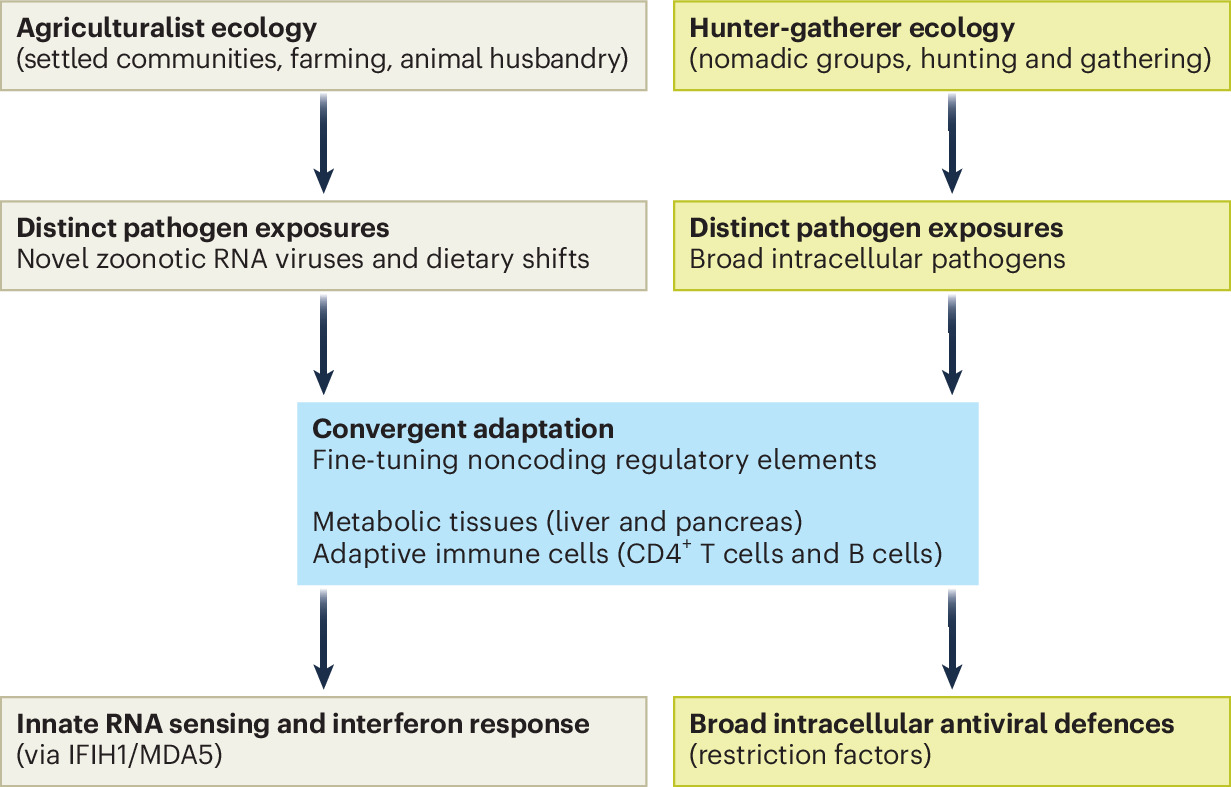
The findings challenge the long-held assumption that the adoption of agriculture primarily resulted in a substantially higher burden of pathogens. Instead, the data indicates that humans experienced concurrent regulatory changes across both immune and metabolically active tissues.
Rethinking the Agricultural Shift
Traditional theories often posit that the move to agricultural societies exposed humans to a greater variety and volume of pathogens. However, this study of 1,092 contemporary individuals questions that narrative. The researchers suggest that the biological impact of this transition was more nuanced than previously understood.1
Regulatory Changes in Human Tissues
The study highlights that the transition to agriculture likely drove regulatory changes in specific areas of the human genome. These adaptations occurred simultaneously in both immune and metabolically active tissues. This suggests a broader evolutionary response to changing lifestyles rather than a singular focus on pathogen defense.1
Key takeaways
- A study of 1,092 individuals challenges the idea that agriculture caused a significantly higher pathogen burden.
- The transition to agriculture is linked to regulatory changes in immune and metabolically active tissues.
- Evolutionary adaptations during the agricultural shift were more complex than simple pathogen-driven selection.
Why this matters
This research provides a more detailed understanding of how human biology adapted to one of the most significant lifestyle shifts in history. By reframing the impact of agriculture on the genome, it offers new insights into the evolutionary origins of modern immune and metabolic functions.
Original reporting
1 article from 1 publication. Read the full reporting at the source.
Related stories
New Genomic Research Advances Polygenic Risk Prediction Methods

Researchers Map Basal Ganglia to Create Three-Dimensional Cellular Atlas of the Human Brain