IMPC Strategic Conference 2026 Outlines Future of Functional Genomics
The International Mouse Phenotyping Consortium is expanding its focus beyond protein-coding genes toward precision medicine and AI-driven discovery.
Nature
Updated · 2 min read
Overview
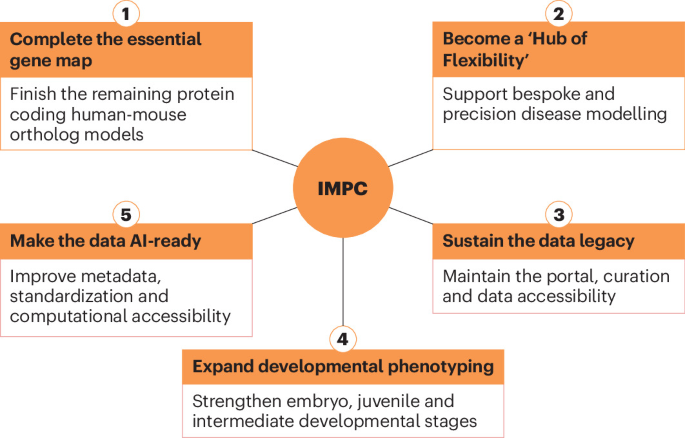
The 2026 IMPC Strategic Conference marked a pivotal shift for the International Mouse Phenotyping Consortium (IMPC). Originally established to characterize all protein-coding genes in mice, the consortium is now evolving into a broader platform that integrates experimental biology with computational and clinical research.
Participants emphasized that the future of functional genomics requires moving beyond the completion of the protein-coding genome. The consortium is now prioritizing precision disease modeling, developmental biology, and the investigation of noncoding regions to better support translational medicine.
Evolution of the Consortium
While the IMPC was initially created to generate knockout mice to characterize protein-coding genes, it has transitioned into a multitiered global infrastructure. The conference highlighted that the organization now bridges traditional functional genomics with modern AI-enabled discovery. This shift reflects a broader goal of serving as critical translational infrastructure for the research community [s1].1
Prioritizing Future Research
Community feedback indicates strong support for expanding the IMPC's scope to include disease variants, conditional alleles, and noncoding regions. These areas are viewed as essential for advancing precision medicine. Additionally, experts stressed that standardized metadata remains vital for ensuring that animal experimental outcomes are reliable and applicable to drug discovery [s1].1
Key takeaways
- The IMPC is evolving from a project focused on protein-coding genes to a broader platform for precision biology and AI-enabled discovery.
- Future research priorities include disease modeling, developmental biology, and the investigation of the noncoding genome.
- Standardized metadata is considered essential for the reliability and translatability of animal experimental outcomes in drug discovery.
- The research community views the IMPC as a critical link between functional genomics and precision medicine.
Why this matters
The IMPC's strategic pivot signals a move toward more complex, data-integrated research models. By incorporating AI and focusing on noncoding regions, the consortium aims to enhance the translational value of its work for clinical applications and drug development.
Original reporting
1 article from 1 publication. Read the full reporting at the source.
Related stories
New Genomic Research Advances Polygenic Risk Prediction Methods

Research Highlights Sex-Specific Biological Factors in Alzheimer’s Disease and Chronic Pain