New Genomic Research Advances Polygenic Risk Prediction Methods
A recent study introduces improved methods for polygenic risk prediction using genome-wide association study summary statistics.
Nature
Updated · 2 min read
Overview
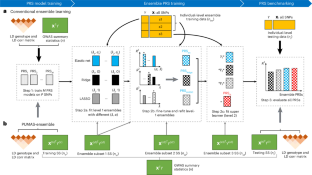
A study published in Nature details new approaches to regularized ensemble polygenic risk prediction, utilizing summary statistics from genome-wide association studies (GWAS). The research leverages large-scale genomic datasets to refine how genetic risk is calculated and understood across diverse populations.
The findings incorporate data from major initiatives, including the All of Us Research Program and the UK Biobank. By analyzing these extensive resources, the researchers aim to enhance the accuracy and utility of genetic risk assessments for complex traits and conditions.
Advancing Genomic Prediction
The research focuses on developing regularized ensemble methods to improve polygenic risk prediction. By utilizing summary statistics from GWAS consortia, the study seeks to create more robust models for predicting genetic predisposition to various health outcomes. This methodology relies on the integration of publicly accessible data provided by GWAS investigators [s1].1
Data Sources and Applications
The study draws upon significant genomic resources, including the All of Us Research Program and the UK Biobank (applications 42148 and 17731). These datasets support a broad range of analyses, including a trans-ancestry study of depression that identified 697 associations linked to specific cell types and pharmacotherapies. Additionally, the research explores genetic drivers of type 2 diabetes and characterizes risk variants for coronary artery disease in over a million participants [s1].1
Key takeaways
- Researchers developed new regularized ensemble methods for polygenic risk prediction using GWAS summary statistics.
- A trans-ancestry study of depression identified 697 associations related to cell types and pharmacotherapies.
- The study utilized data from the All of Us Research Program and the UK Biobank.
- The research included a large-scale characterization of risk variants for coronary artery disease involving over one million participants.
Why this matters
These advancements in polygenic risk prediction methods improve the ability to analyze complex genetic data. By refining these models, researchers can better identify genetic drivers for conditions like depression, type 2 diabetes, and coronary artery disease.
Original reporting
1 article from 1 publication. Read the full reporting at the source.
Related stories
IMPC Strategic Conference 2026 Outlines Future of Functional Genomics

Research Highlights Sex-Specific Biological Factors in Alzheimer’s Disease and Chronic Pain