Apple Launches Research Study to Evaluate AI in Healthcare
Apple is collaborating with OpenEvidence to study how patients use AI-powered tools to navigate medical information and health data.
Apple, ABC News
Updated · 2 min read
Overview
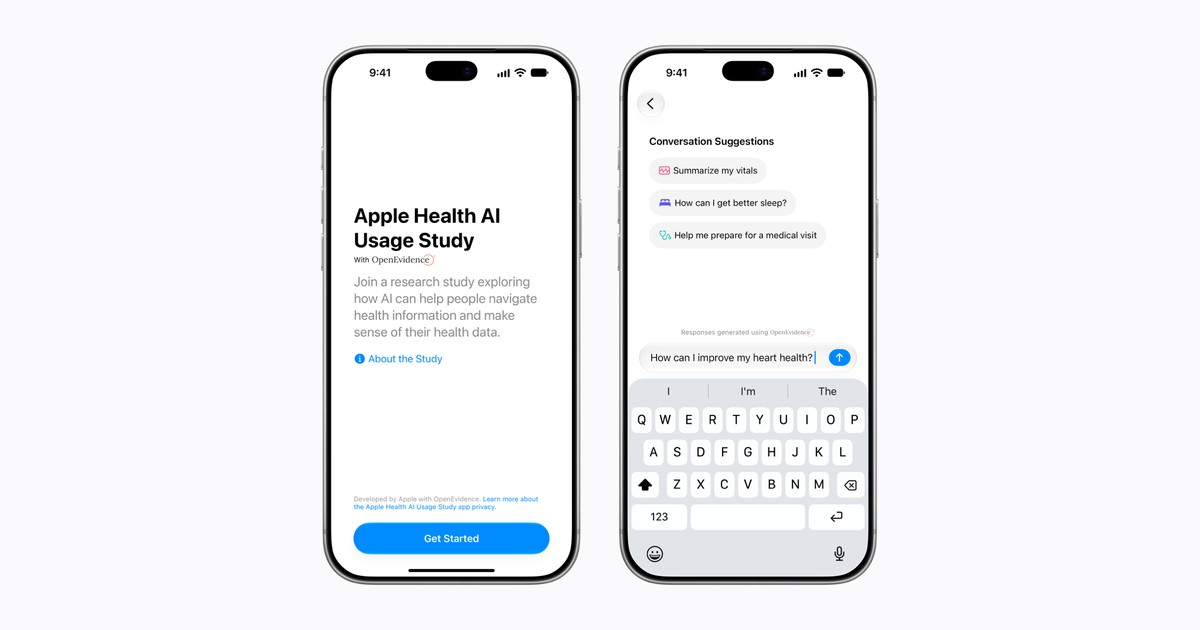
Apple has initiated a research study designed to explore the application of artificial intelligence in health, specifically focusing on how patients interact with medical information. The project combines Apple’s research platform with OpenEvidence, a clinical AI tool that utilizes data from established medical journals such as The New England Journal of Medicine and Nature.
Participants in the study will use an app to ask health-related questions, receive information in accessible language, and view peer-reviewed clinical citations. Users may also choose to share specific HealthKit data, including sleep, activity, and lab results, to further explore the integration of AI in personal health management.
Bridging the Gap Between Patients and Clinicians
The study aims to address the disconnect between the tools used by clinicians and those used by patients. By providing patients with access to medically grounded AI, the initiative seeks to improve the quality of clinical conversations and streamline care. Experts note that when both parties utilize the same trustworthy information, patients are better prepared for medical consultations.1
Addressing AI Usage in Health Contexts
While research indicates that AI chatbots can accurately identify medical conditions in clinical settings, everyday users often struggle to interpret dense medical guidance. Despite this, a significant portion of the population, particularly adults under 30, are already using AI for health advice. Researchers emphasize the need to understand how these tools are used in practice to prevent incomplete information from causing false reassurance or delayed care.2
Key takeaways
- Apple is partnering with OpenEvidence to study AI-driven health information access.
- The study allows participants to share HealthKit data, such as heart rate and lab results, alongside their AI interactions.
- Research cited by ABC News suggests that while AI chatbots are highly accurate in clinical tests, general users often struggle to correctly interpret the guidance provided.
- Approximately 35% of adults, and about half of adults under 30, currently use AI chatbots for health-related inquiries.
Why this matters
As millions of people increasingly turn to AI for health advice, there is a critical need to ensure that information is both accurate and actionable. This study seeks to bridge the gap between clinical-grade AI tools and patient understanding to improve health outcomes.
Perspectives
How different voices in the coverage frame this story.
Clinical Integration
Dr. Robert M. Wachter of UCSF suggests that connecting patients and clinicians through shared, trustworthy AI tools can improve the quality of medical conversations and care.
Source: Apple
Public Health Risk
Dr. John Brownstein of Harvard Medical School notes that while people are using AI for health advice, the potential for confusing or incomplete information poses a risk of delayed care or false reassurance.
Source: ABC News
Original reporting
2 articles from 2 publications. Read the full reporting at the source.
Related stories

Apple Launches Research App to Study Consumer Use of AI for Health Queries

Apple and OpenEvidence Launch Experimental AI Health Chat Study
