Trump, Xi, and Putin Hold Unprecedented Three-Way Summit in China
The leaders of the United States, China, and Russia met for historic security talks, though the gathering concluded without concrete agreements on major global conflicts.
Nationthailand, AEI
Updated · 2 min read
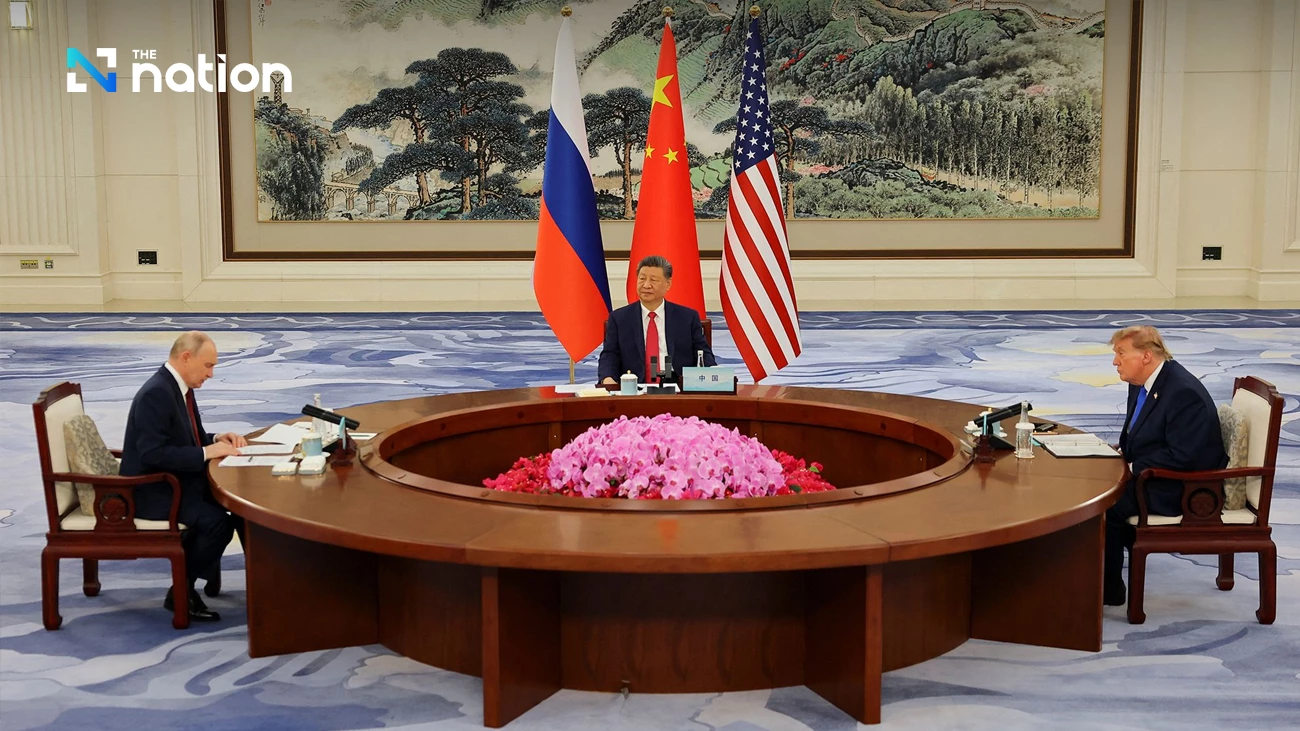
Overview
U.S. President Donald Trump, Chinese President Xi Jinping, and Russian President Vladimir Putin met in China for a rare three-way summit focused on global security. The meeting, initially proposed by Putin to discuss the war in Ukraine, marked a significant moment of high-level diplomacy between the three rival powers. While the leaders projected an image of cooperation and friendship, the summit concluded without formal resolutions regarding nuclear arms control, economic disputes, or the ongoing wars in Ukraine and Iran.
The event has drawn comparisons to the 1945 Yalta Conference, raising concerns among middle powers and U.S. allies about potential deals to divide global spheres of influence. Despite the diplomatic pageantry, geopolitical competition remains sharp, with the three nations continuing to engage in proxy wars and jockeying for military and economic influence across regions such as Africa.
Diplomatic Objectives and Symbolic Success
For each leader, the summit served specific strategic purposes beyond policy outcomes. Trump sought to demonstrate diplomatic influence on nuclear security and Iran, while Putin used the event to return to the highest level of international diplomacy. Xi Jinping, as the host, aimed to strengthen China's image as a global power capable of mediating between major rivals.1
Unresolved Conflicts and Proxy Tensions
Despite the 'historic' nature of the encounter, the meeting itself was the primary achievement as no concrete agreements were reached on the wars in Ukraine or Iran. While the leaders met in person, their nations continue to clash through proxy wars and competition for military access in countries like Niger, Ethiopia, and Sudan.12
Allied Anxiety and the 'New Yalta'
The summit triggered significant anxiety among U.S. allies and partners, who expressed concern over 'dirty deals' that might carve up the globe. The absence of Ukrainian representatives at a meeting intended to discuss their national conflict prompted comparisons to the 1945 Yalta Conference, where major powers negotiated the post-war international order.12
Key takeaways
- The summit was the first three-way meeting between Trump, Xi, and Putin to discuss global security.
- No concrete agreements were reached on nuclear arms control, economic disputes, or the wars in Ukraine and Iran.
- The meeting was initially proposed by Vladimir Putin to discuss the Ukraine conflict without Ukrainian presence.
- U.S. allies expressed concern that the three powers might negotiate spheres of influence behind closed doors.
- Geopolitical competition continues through proxy wars in Africa, including conflicts in Sudan and Ethiopia.
Why this matters
The summit represents a rare moment of direct engagement between the world's three most powerful rivals during a period of intense global instability. While it demonstrates a willingness to communicate, the lack of policy breakthroughs suggests that diplomatic pageantry has yet to translate into practical cooperation on the world's most pressing security issues.
Perspectives
How different voices in the coverage frame this story.
Great Power Optimism
The leaders framed the meeting as a historic opportunity to project an image of cooperation and demonstrate their collective influence over global affairs.
Source: Nationthailand, AEI
Middle Power and Ally Skepticism
U.S. allies and nations like Ukraine view the summit with apprehension, fearing that major powers are negotiating international order and spheres of influence without their input.
Source: Nationthailand, AEI
Original reporting
2 articles from 2 publications. Read the full reporting at the source.
Related stories
Trump, Putin, and Xi Prepare for High-Stakes Trilateral Summit
World Leaders Convene in Shenzhen for APEC Summit Amid Global Uncertainty
