New Scientific Discoveries: Rapid Pulsar Detection and Potential Mars Surface Water
Researchers have developed a high-speed method for identifying pulsars, while a decade of Martian atmospheric data points to the presence of surface water.
NASA, Phys.org
Updated · 2 min read
Overview
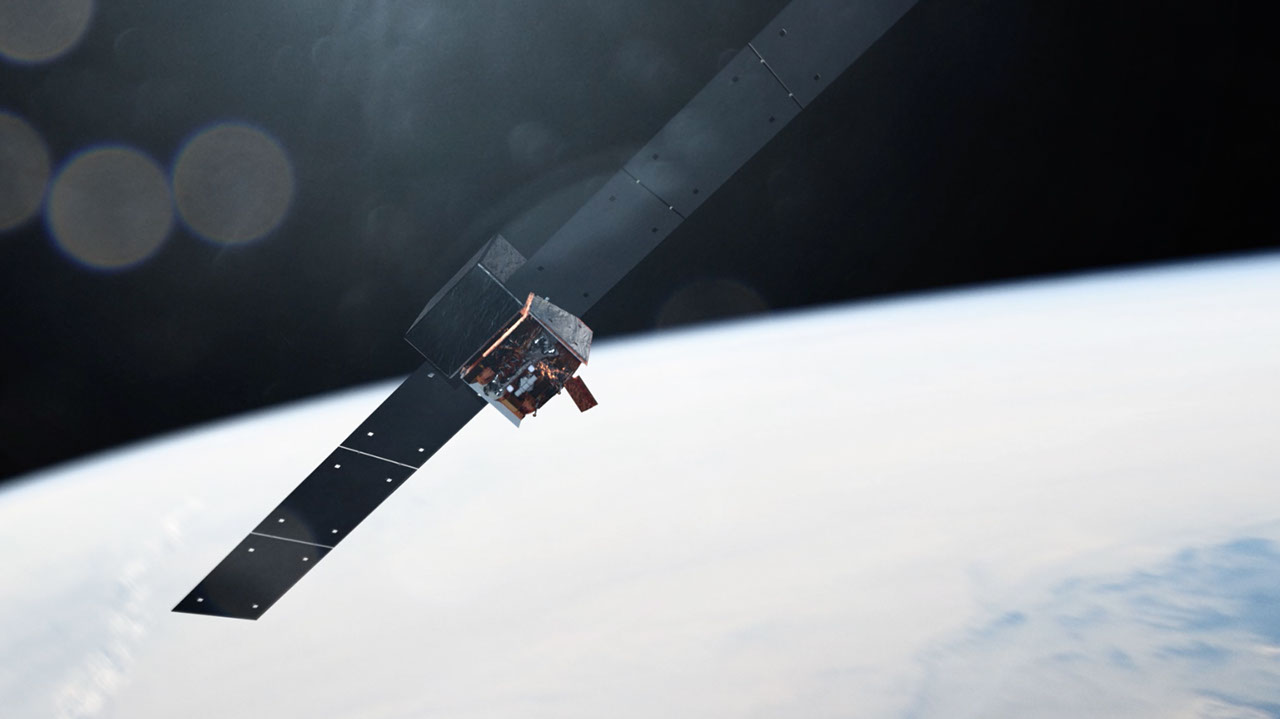
Recent scientific advancements have yielded significant findings in both astrophysics and planetary science. An international team has introduced a new, computationally efficient method to detect pulsars using NASA's Fermi Gamma-ray Space Telescope data, while researchers analyzing long-term data from the Curiosity rover have uncovered evidence suggesting the existence of water on the Martian surface.
These developments highlight the ongoing value of long-term data collection from space missions. By applying new analytical techniques to existing datasets, scientists are uncovering phenomena that were previously difficult or impossible to detect with traditional methods.
Accelerating Pulsar Discovery
An international team has created a method capable of finding pulsars in public NASA data approximately one million times faster than previous techniques. Utilizing 15 years of data from the Fermi Gamma-ray Space Telescope, the researchers successfully identified an isolated pulsar, PSR J1622−7204, using only a standard computer processor. The team now aims to apply this cryptography-based approach to locate pulsars within binary systems, which have historically been difficult to detect due to signal distortion from companion stars.1
Evidence of Water on Mars
A study analyzing over a decade of atmospheric data from NASA's Curiosity rover suggests the presence of small amounts of surface water on Mars. By examining carbon dioxide isotope patterns from Gale Crater between 2012 and 2025, researchers identified seasonal changes that could not be explained by carbon dioxide freezing alone. The findings point to processes involving water attached to soil grains or existing as thin, liquid-like films on the surface.2
Key takeaways
- A new algorithm can identify pulsars using standard laptop hardware in about five minutes per trial.
- The new pulsar detection method successfully identified PSR J1622−7204, a pulsar spinning 261 times per second.
- Curiosity rover data from 2012–2025 indicates seasonal isotope changes in Mars' atmosphere that suggest surface water activity.
- The Martian atmospheric findings were derived from analyzing carbon dioxide isotopes within Gale Crater.
Why this matters
These findings demonstrate how re-evaluating long-term archival data with new analytical models can lead to major discoveries. Whether by accelerating the search for cosmic objects or clarifying planetary surface conditions, these methods maximize the scientific return on existing space mission investments.
Original reporting
2 articles from 2 publications. Read the full reporting at the source.
Related stories
NASA ESCAPADE Mission Completes Earth Flybys and Begins Transit to Mars
NASA's ESCAPADE Mission Completes Earth Flybys and Begins Transit to Mars