NASA Completes Instrument Calibration for Hydrosat Osiris Satellite Fleet
NASA has finalized prelaunch testing for a new four-satellite fleet designed to monitor Earth's surface using advanced infrared sensor technology.
NASA
Updated · 2 min read
Overview
NASA has completed the instrument calibration process for Hydrosat Osiris, a forthcoming fleet of four satellites. Each refrigerator-sized satellite is equipped with a payload of visible-near-infrared and long-wave-infrared sensors designed to capture precise data about Earth's surface.
The project aims to provide high-resolution imagery and thermal data that can detect subtle environmental changes invisible to the human eye. By ensuring the accuracy of these instruments, NASA intends to support a wide range of applications, including agricultural management and disaster assessment.
Advanced Sensor Capabilities
The Hydrosat Osiris satellites utilize sensors capable of detecting light beyond the human visual spectrum. This technology allows the fleet to identify environmental conditions that are otherwise imperceptible, such as early signs of crop dehydration or stress. By combining visual data with thermal sensor readings, the system provides a detailed view of surface conditions.1
Practical Applications
The data collected by the satellites is intended for diverse uses, ranging from monitoring crop health to assessing infrastructure damage following hurricanes. In agriculture, for instance, the technology can help farmers optimize irrigation by identifying specific areas of a field that require water, rather than treating the entire area uniformly. This targeted approach is designed to improve resource efficiency.1
Key takeaways
- NASA completed instrument calibration for the four-satellite Hydrosat Osiris fleet.
- The satellites carry visible-near-infrared and long-wave-infrared sensors.
- The technology can detect subtle changes, such as crop stress, that are invisible to the human eye.
- Applications include improved agricultural irrigation efficiency and post-hurricane infrastructure assessment.
Why this matters
The Hydrosat Osiris mission aims to provide high-precision environmental data that can improve resource management, particularly in agriculture. By enabling more targeted interventions, the technology offers a pathway to more efficient water usage and better disaster response capabilities.
Original reporting
1 article from 1 publication. Read the full reporting at the source.
Related stories
NASA Awards Northrop Grumman Contract for Next-Generation NOAA Weather Instruments
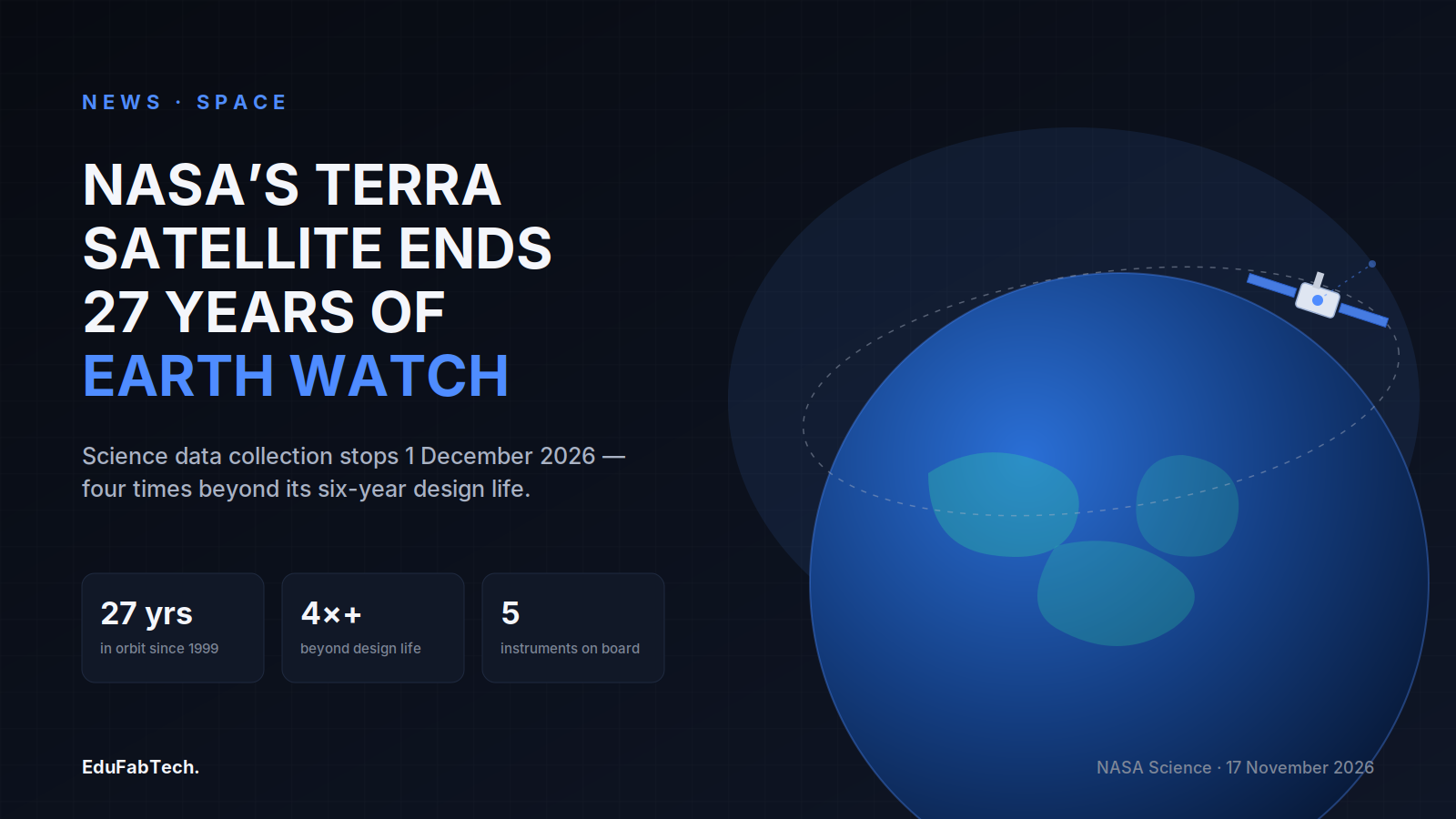
NASA's Terra Satellite Nears Conclusion of 27-Year Earth Science Mission