NASA Awards Northrop Grumman Contract for Next-Generation NOAA Weather Instruments
Northrop Grumman will develop three microwave sounders for the Near Earth Orbit Network to improve global weather forecasting capabilities.
NASA
Updated · 2 min read
Overview
NASA has awarded a contract to Northrop Grumman for the development of the Sounder for Microwave-Based Applications (SMBA) instruments. These next-generation microwave sounders will be part of the National Oceanic and Atmospheric Administration's (NOAA) Near Earth Orbit Network program.
The SMBA instruments are designed to provide critical measurements of atmospheric temperature and moisture from low Earth orbit. These data points are essential for understanding weather patterns and are expected to enhance medium-range forecasts for the National Weather Service.
Instrument Development and Mission Support
Northrop Grumman is responsible for the design, development, production, and testing of three SMBA instruments. The contract also includes providing mission support for these low Earth orbit microwave sounders.1
Interagency Collaboration
NASA’s Goddard Space Flight Center is managing the acquisition process for the instruments. Once completed, NOAA will own and operate the hardware, delivering the resulting data to users across the globe.1
Key takeaways
- Northrop Grumman will produce three SMBA instruments for NOAA's Near Earth Orbit Network.
- The instruments measure atmospheric temperature and moisture to track weather patterns.
- NASA's Goddard Space Flight Center is managing the contract acquisition.
- The data will be used to improve medium-range forecasts for the National Weather Service.
Why this matters
The SMBA instruments provide essential atmospheric data that directly influences the accuracy of weather predictions. Improving these measurements helps the National Weather Service provide more reliable medium-range forecasts for global users.
Original reporting
1 article from 1 publication. Read the full reporting at the source.
Related stories
NASA Completes Instrument Calibration for Hydrosat Osiris Satellite Fleet
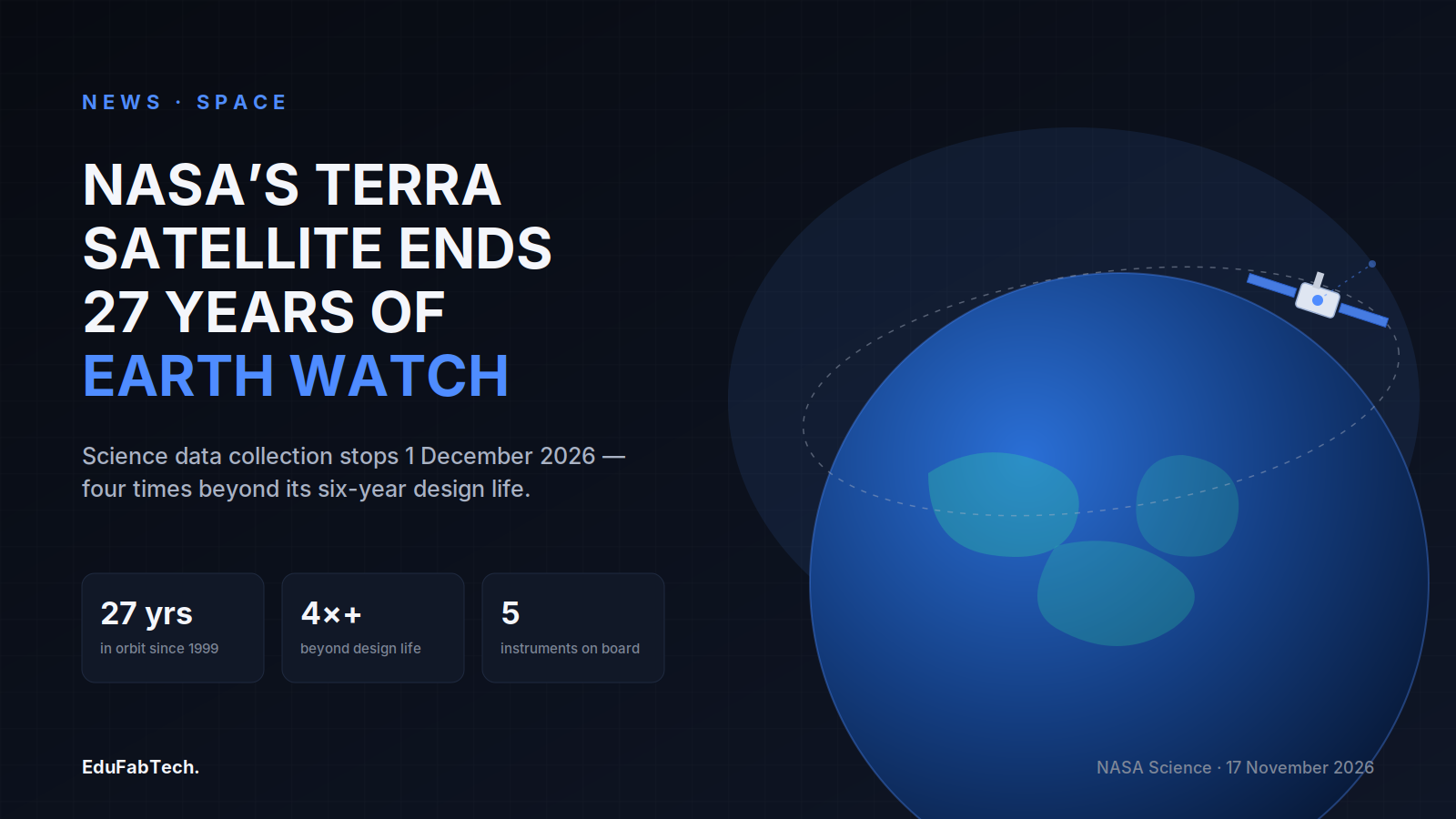
NASA's Terra Satellite Nears Conclusion of 27-Year Earth Science Mission
