Key Term Sheet Provisions and Strategic Investors in Tech Startup Seed Funding
Navigating seed funding requires tech startup founders to understand the implications of strategic corporate investors and specific term sheet provisions.
NetSuite
Updated · 2 min read
Overview
Seed funding involves crucial decisions regarding when to seek capital and which investors to partner with. Corporate venture arms and strategic investors can provide capital alongside strategic advantages, though their interests may not always align with the startup's goals.
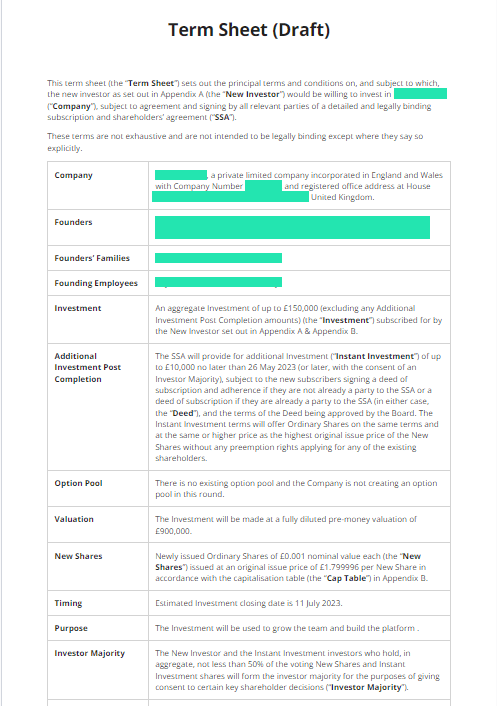
During term sheet negotiations, most terms remain non-binding initially, but certain provisions take immediate effect. Founders must carefully evaluate immediate clauses, liquidation preferences, and option pool sizes to protect their equity and operations.
Strategic Investors and Corporate Venture Arms
Corporations and corporate venture arms often invest in tech startups for reasons beyond financial returns, including future acquisitions or early product access. Partnering with strategic investors can grant startups advantages such as distribution capabilities and enhanced credibility with future investors. However, strategic investors can be highly selective, and corporate parent companies may exert pressure due to interests that do not fully align with the startup.1
Critical Term Sheet Provisions
While most of a term sheet is non-binding, clauses like confidentiality and exclusivity take effect immediately upon signing. An exclusivity or 'no-shop' clause typically lasts from a few weeks to a couple of months, preventing the startup from shopping the deal to other investors during due diligence. Founders must also monitor liquidation preferences, which dictate repayment priority during a sale, and the size of the option pool set aside for future hires, as oversized pools dilute existing shareholders.1
Key takeaways
- Strategic corporate investors can offer distribution and credibility, but may bring conflicting corporate interests.
- Exclusivity or 'no-shop' clauses take effect immediately and usually restrict shopping a deal for a few weeks to two months.
- Liquidation preferences dictate repayment amounts and priority if the company is sold.
- Oversized option pools intended for future hires can dilute existing shareholder equity.
- Data tracked by law firm Cooley in Q4 2025 indicates that 98% of tracked deals followed founder-friendly standard terms.
Why this matters
Understanding term sheet mechanics helps founders avoid unwanted dilution and restrictive investor terms during early financing rounds. Recognizing the trade-offs of corporate venture capital allows startups to align their long-term growth with suitable strategic partners.
Original reporting
1 article from 1 publication. Read the full reporting at the source.
Related stories

The Mechanics and Risks of Right of First Refusal in Startup Deals

Corporate Startup Activity Index Introduces Multi-Model Framework for Measuring Innovation Engagement
