Celestial Bodies as Potential Dark Matter Traps and Atmospheric Influence on Solar Storms
Recent research explores how Earth's atmosphere may intensify solar storms and how celestial bodies like Jupiter and white dwarfs could serve as traps for dark matter.
ScienceDaily, Phys.org
Updated · 2 min read
Overview
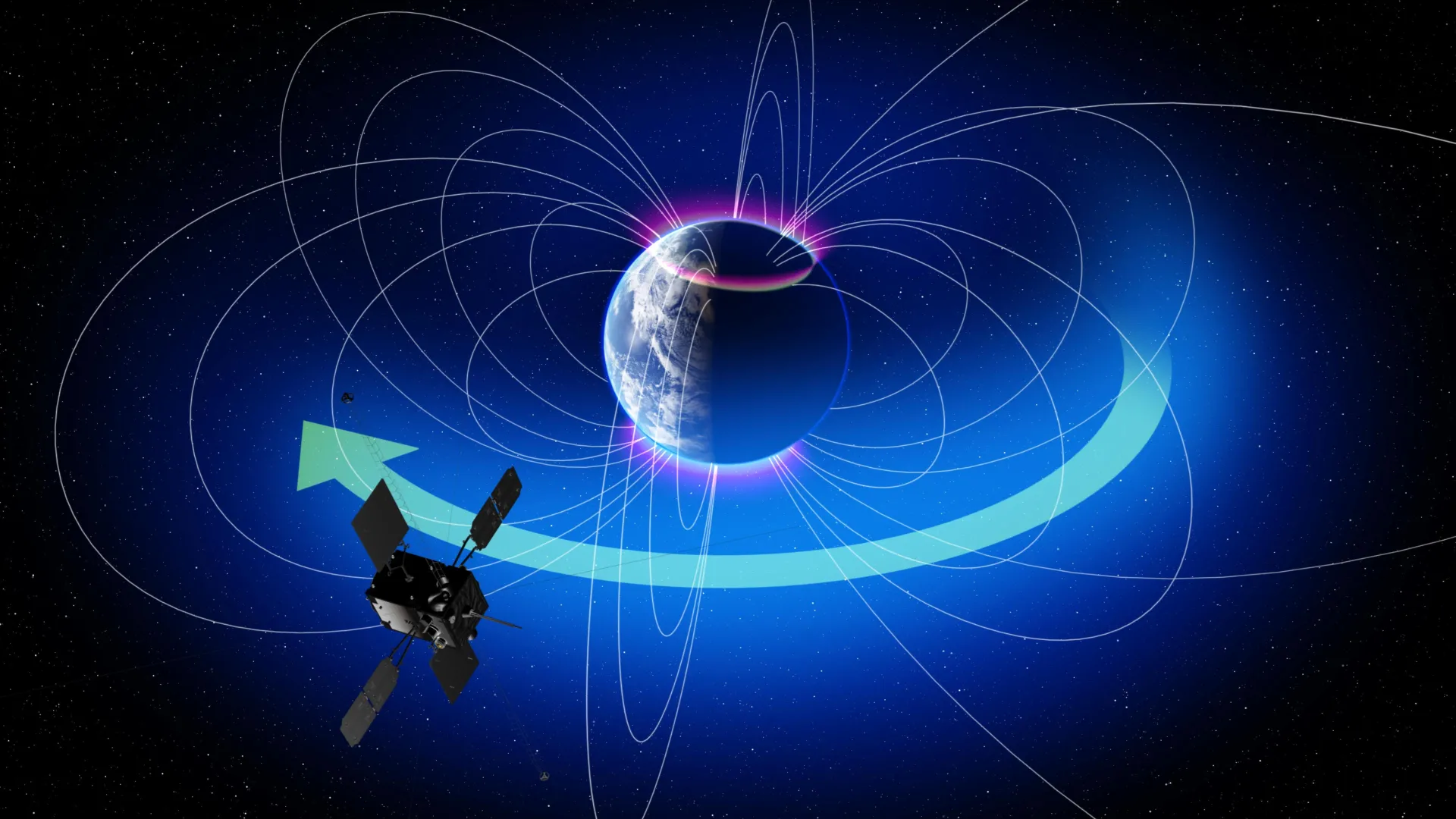
Scientific investigations are revealing new complexities in how celestial bodies interact with cosmic forces. One study suggests that Earth's own upper atmosphere may worsen the intensity of solar storms by releasing ions that contribute to the ring current, which weakens the planet's magnetic field at ground level. This interaction between atmospheric material and solar activity is a critical factor in predicting space weather that can disrupt global infrastructure.
Simultaneously, researchers are examining Earth, the Sun, Jupiter, and white dwarfs as potential 'traps' for dark matter. By looking for neutrinos produced by dark matter annihilation or identifying unusual heating in colder stars and planets, scientists hope to find clues about the nature of dark matter within our solar system and beyond.
Earth's Role in Solar Storm Intensity
New measurements indicate that conditions in Earth's upper atmosphere influence the eventual intensity of geomagnetic storms. Atmospheric ions escaping into the magnetosphere create an electrical current that generates a magnetic field opposing Earth's natural field, a process that can be tracked to measure storm strength.1
The FACTORS Mission
A proposed mission involving two satellites, known as FACTORS, is being prepared for a JAXA proposal opportunity. The mission aims to investigate how ions flow from the atmosphere into the magnetosphere to improve forecasts of space weather that threatens communications and power grids.1
Searching for Dark Matter Traps
Researchers at Sogang University are using celestial bodies to search for dark matter signatures. While experiments like IceCube look for neutrinos from the Sun and Earth, scientists are also considering the heating effects dark matter might have on Jupiter and white dwarfs.2
Key takeaways
- Atmospheric ions escaping into the magnetosphere can weaken Earth's magnetic field during solar storms.
- The proposed FACTORS mission would use two satellites to study the interaction between Earth's atmosphere and solar material.
- Neutrinos from dark matter annihilation are being sought using detectors like IceCube at the South Pole.
- Colder white dwarfs in dense dark matter regions and exoplanets are considered prime targets for future dark matter searches.
Why this matters
Understanding the interaction between Earth's atmosphere and solar storms is vital for protecting power infrastructure and navigation systems. Additionally, identifying dark matter traps in celestial bodies could provide the first concrete evidence of the universe's most elusive substance.
Perspectives
How different voices in the coverage frame this story.
Atmospheric Science
Focuses on the internal mechanisms of Earth's atmosphere that contribute to the severity of space weather events.
Source: ScienceDaily
Quantum Spacetime Research
Views celestial bodies as natural laboratories for detecting dark matter through neutrino emissions and thermal changes.
Source: Phys.org
Original reporting
2 articles from 2 publications. Read the full reporting at the source.
Related stories

Earth as a Cosmic Spectacle: Contextualizing Biodiversity Through Dark Skies

Euclid Space Telescope Releases First Major Data Set Mapping the Dark Universe
