Apple and OpenEvidence Launch Experimental AI Health Chat Study
The companies have introduced an experimental AI-powered health chatbot to study user trust and interaction quality in a clinical context.
STAT
Updated · 2 min read

Overview
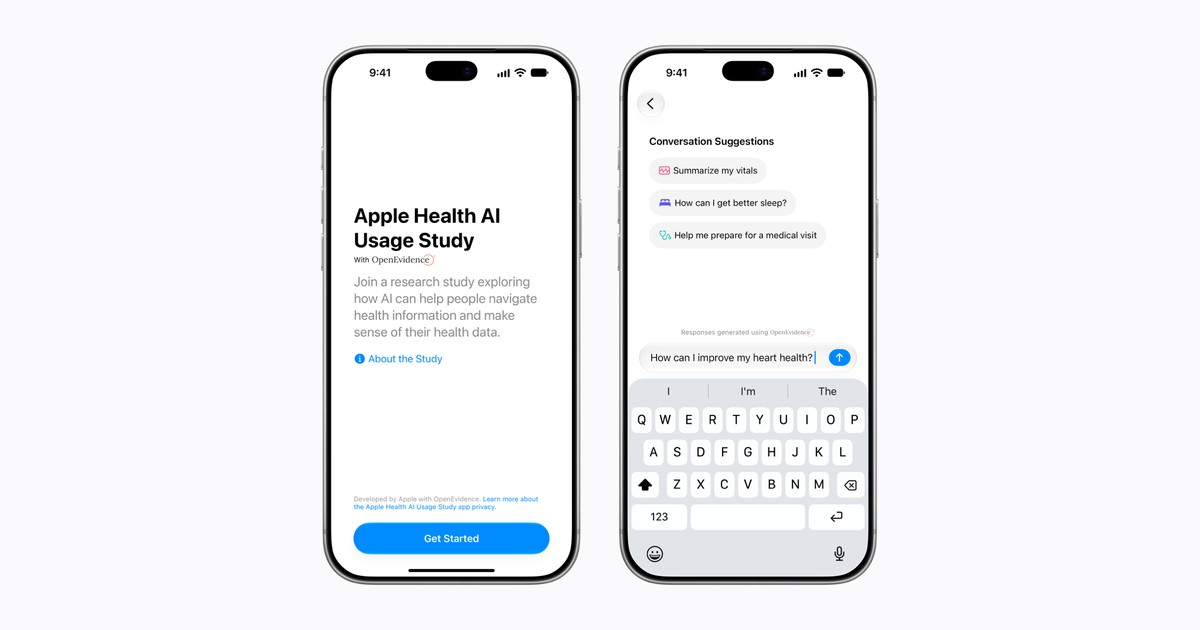
Apple and OpenEvidence have launched a joint study centered on an experimental, artificial intelligence-powered health chat application. Announced at the HLTH conference in Las Vegas, the initiative marks a collaborative effort to explore the integration of AI within health and life sciences.
Sumbul Desai, Apple’s vice president of health and fitness, stated that the study is driven by a commitment to scientific rigor. The project aims to evaluate how consumers engage with conversational health AI, specifically focusing on user trust, comprehension, and the quality of the information provided.
Focus of the Study
The primary objective of the research is to gain a deeper understanding of how individuals interact with AI-driven health tools. Researchers are examining key metrics such as user trust, how effectively people understand the responses generated by the AI, and the overall quality of those responses. Apple selected OpenEvidence as a partner specifically for its clinically grounded approach to health information.1
Strategic Partnership
The collaboration was announced on stage at the HLTH conference in Las Vegas. According to Sumbul Desai, the partnership leverages OpenEvidence's expertise to ensure the study maintains high clinical standards. This experimental application hints at potential new directions for both companies in the health technology sector.1
Key takeaways
- Apple and OpenEvidence launched an experimental AI-powered health chat application.
- The study aims to measure user trust, response quality, and user comprehension of AI-generated health information.
- The partnership was announced at the HLTH conference in Las Vegas.
- Apple's involvement is motivated by a focus on scientific rigor in health technology.
Why this matters
This study represents a significant step in evaluating the viability and safety of conversational AI in healthcare settings. By focusing on user trust and clinical grounding, the collaboration seeks to address critical questions regarding how consumers interact with AI-driven medical information.
Original reporting
1 article from 1 publication. Read the full reporting at the source.
Related stories
Apple Launches Research Study to Evaluate AI in Healthcare

Apple Launches Research App to Study Consumer Use of AI for Health Queries
