South Korea Leverages Materials Science to Address Natural Resource Scarcity
A new scientometric analysis explores how South Korea uses materials science research to drive innovation in semiconductors, energy storage, and future technologies.
Nature
Updated · 2 min read
Overview
Materials science has emerged as a foundational pillar for modern technology since its development as an academic discipline in the late 1950s. It provides the essential breakthroughs necessary for established industries like semiconductors and displays, as well as emerging fields such as quantum computing and aerospace.
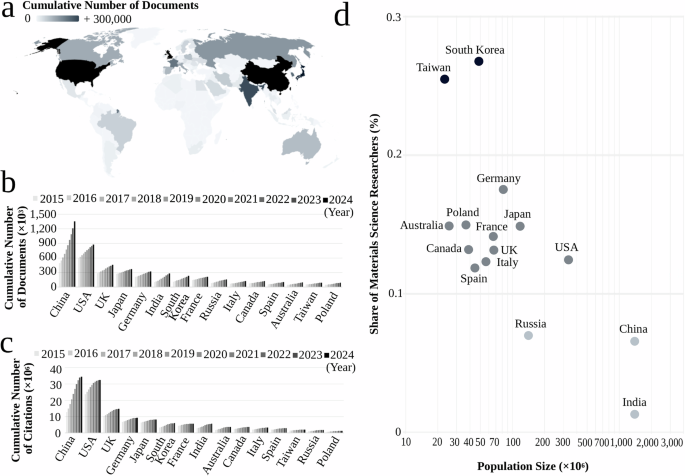
In South Korea, the field has been strategically utilized to overcome a lack of natural resources. While the nation has successfully integrated materials science into its industrial landscape, comprehensive scientometric mapping of these research trajectories has previously been limited.
Foundations of Modern Industry
Materials science serves as a critical catalyst for innovation in several core sectors, including energy storage and advanced automotive technologies. Individual studies in the field aggregate to define broader research trends that shape specific eras of technological development.1
Strategic Research in South Korea
South Korea has specifically leveraged materials science to mitigate its scarcity of natural resources. The nation's research impact is concentrated in industry, though it is scaled through academic institutions and universities.1
Emerging Analytical Frameworks
New platforms like the Web of Science now provide granular classification frameworks for materials science. These tools allow for more detailed investigations into research landscapes that were previously difficult to map comprehensively.1
Key takeaways
- Materials science became a distinct academic discipline in the late 1950s.
- The field is essential for future technologies like quantum computing and aerospace.
- South Korea uses materials research to compensate for a lack of natural resources.
- Research impact in South Korea is concentrated in industry but scaled through universities.
- Comprehensive scientometric analyses of the materials science field remain scarce.
Why this matters
Materials science provides the breakthroughs required for both current industrial stability and future technological frontiers. For resource-scarce nations like South Korea, mastering this field is a strategic necessity for economic and technical sovereignty.
Original reporting
1 article from 1 publication. Read the full reporting at the source.
Related stories

AI Accelerates Scientific Discovery While Raising Questions About Verification and Trust

Hedge Funds Shift Portfolios Toward Semiconductor Materials and AI Infrastructure in Third Quarter
