Managing Vitamin B12 Deficiency in Crohn’s Disease Patients After Ileal Resection
Researchers examined current clinical practices for vitamin B12 supplementation in patients with Crohn’s disease who have undergone terminal ileal resection.
Nature
Updated · 2 min read
Overview
Vitamin B12 is absorbed in the terminal ileum, making patients with Crohn’s disease who undergo terminal ileal resection (RTI) particularly susceptible to B12 deficiency. Despite this known risk, there are currently no standardized recommendations regarding how to monitor or supplement B12 levels in patients who have undergone non-extensive RTI.
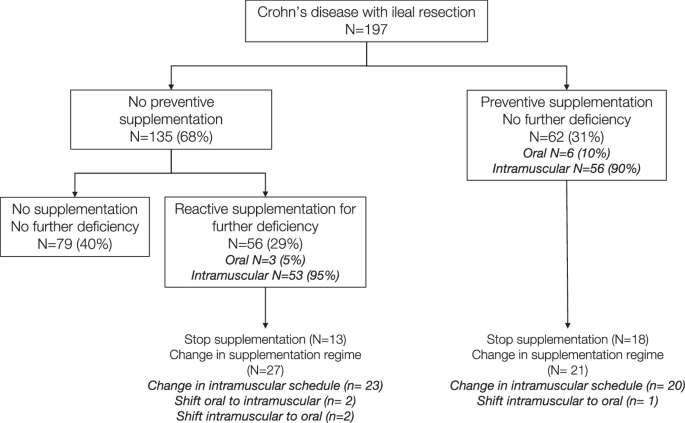
A recent retrospective, single-centre study aimed to address this gap by describing existing supplementation modalities and identifying factors associated with B12 deficiency in this specific patient population. The study analyzed data from patients with Crohn’s disease who underwent RTI between January 2008 and October 2022.
The Challenge of B12 Absorption
The terminal ileum is the primary site for vitamin B12 absorption in the human body. When patients with Crohn’s disease undergo surgical resection of this area, their ability to absorb the vitamin is compromised, placing them at risk for deficiency. Clinical practice currently lacks established guidelines for managing these patients after non-extensive surgery.1
Study Methodology
To better understand current clinical approaches, researchers conducted a retrospective study at a single center. The study included patients with Crohn’s disease who had undergone terminal ileal resection between January 2008 and October 2022. Investigators recorded data on B12 levels, the indications for supplementation, and the specific routes of administration used in clinical practice.1
Key takeaways
- Vitamin B12 is absorbed in the terminal ileum, putting patients who have had this area surgically removed at risk of deficiency.
- There is a lack of standardized clinical recommendations for B12 monitoring and supplementation following non-extensive terminal ileal resection.
- The study analyzed patient data from a single center covering surgeries performed between 2008 and 2022.
Why this matters
Establishing clear guidelines for B12 supplementation is essential for managing the long-term health of Crohn’s disease patients who have undergone ileal resection. Understanding current practices helps identify gaps in care for this vulnerable population.
Original reporting
1 article from 1 publication. Read the full reporting at the source.
Related stories

Developments in International and U.S. Health Research Networks

Understanding Health Research
