ESA Hera Mission Captures First Close-Up Images of Didymos Asteroid System
The European Space Agency's Hera spacecraft has returned its first detailed views of the asteroid system impacted by NASA's DART mission in 2022.
ScienceDaily
Updated · 2 min read
Overview
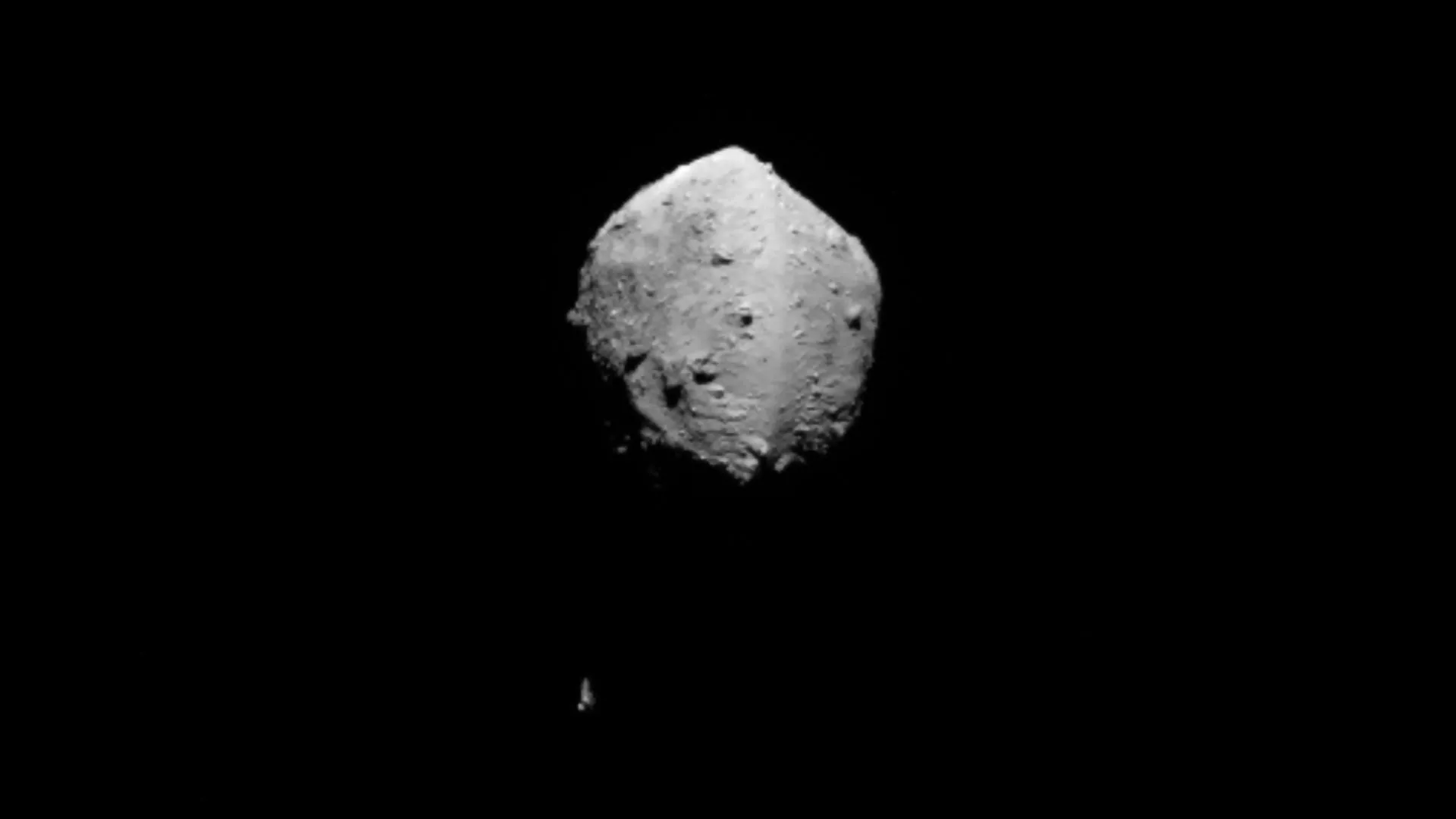
The European Space Agency's (ESA) Hera spacecraft has successfully captured its first close-up images of the Didymos binary asteroid system from a distance of 600 kilometers. This milestone provides a new perspective on the site where NASA's DART spacecraft intentionally collided with the smaller asteroid, Dimorphos, on September 26, 2022.
The mission aims to investigate the aftermath of that historic deflection experiment. While Dimorphos remains largely in shadow in these initial monochrome images, the larger asteroid, Didymos, is clearly visible, revealing surface characteristics that scientists are now beginning to analyze.
Investigating Impact Debris
Scientists are examining whether material ejected from Dimorphos during the DART impact traveled across the 1-kilometer gap to land on Didymos. Hera mission scientist Michael Kueppers noted that identifying these transported materials will be a primary focus of the investigation. The team expects that some surface features on Didymos may have originated from this cross-body debris transfer.1
Mapping Systemic Changes
The Hera spacecraft utilized its monochrome Asteroid Framing Camera to acquire these initial views. The mission's goal is to systematically map both bodies to identify changes caused by the 2022 impact, which successfully shifted Dimorphos's orbit around Didymos. Researchers look forward to obtaining more detailed data as the spacecraft continues its close-range study.1
Key takeaways
- Hera captured its first close-up images of the Didymos system from 600 km away.
- The mission is investigating the site of NASA's 2022 DART asteroid deflection experiment.
- Scientists believe debris from the Dimorphos impact may have reached the surface of Didymos.
- The DART impact successfully shifted the orbit of Dimorphos around its larger companion.
- ESA researchers plan to systematically map both asteroids to identify physical changes.
Why this matters
This mission provides the first detailed follow-up to the world's first planetary defense test. Understanding how the impact affected both asteroids helps scientists refine techniques for protecting Earth from potential future asteroid threats.
Perspectives
How different voices in the coverage frame this story.
Scientific Investigation
Researchers are focused on the transport of impact-ejected material between the two asteroids and how it altered the system's physical characteristics.
Source: ScienceDaily
Original reporting
1 article from 1 publication. Read the full reporting at the source.
Related stories
NASA's ESCAPADE Mission Completes Earth Flybys and Begins Transit to Mars
SpaceX Cargo Mission Returns Research Samples from International Space Station