COP31 Climate Summit Enters Overtime Amid Disputes Over Fossil Fuels and Funding
Negotiators in Antalya struggle to reach an agreement as the final draft omits fossil fuel mentions and vulnerable nations demand increased financial support from wealthy polluters.
Associated Press
Updated · 2 min read
Overview
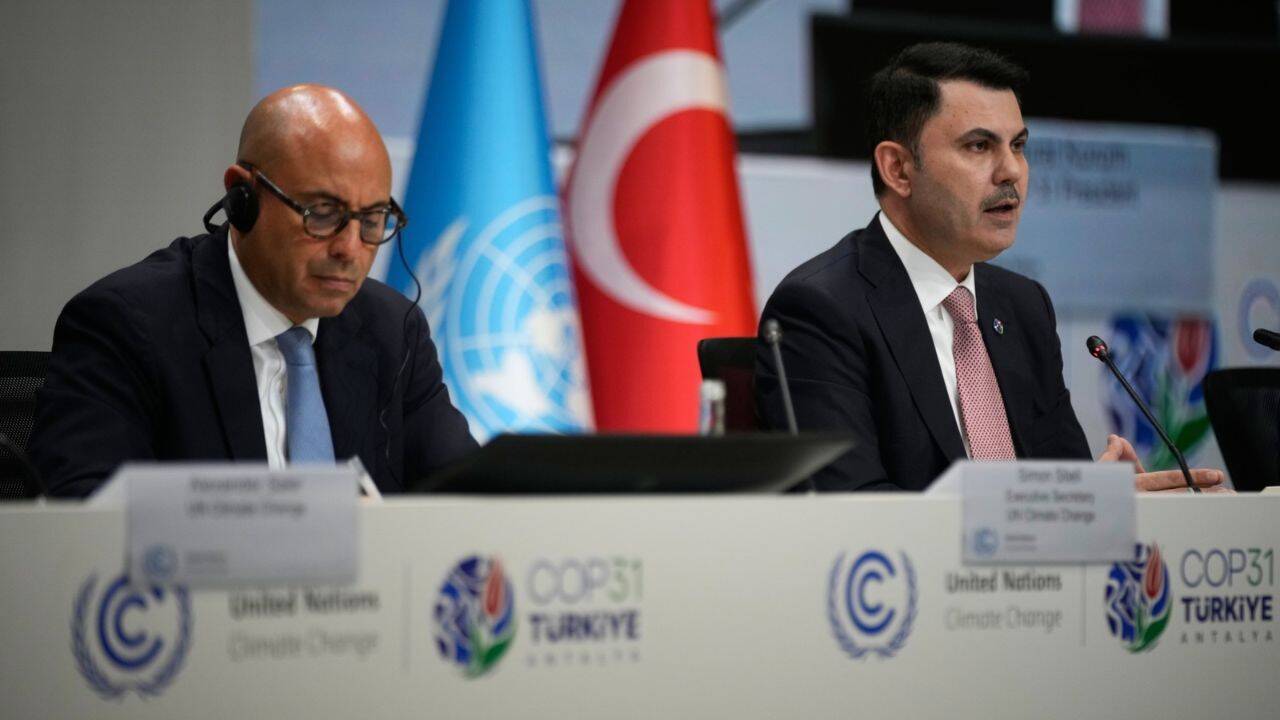
The COP31 United Nations climate summit in Antalya, Turkey, has extended into overtime as participating nations fail to reach a consensus on a final agreement. The two-week summit, which was scheduled to conclude on Friday, has faced significant criticism for a draft document that lacks any mention of fossil fuels, despite warnings that urgent cuts to coal, oil, and gas emissions are necessary to prevent catastrophic warming.
The deadlock occurs against a backdrop of intensifying global disasters, including recent heat waves in Europe and flooding in Nepal. While vulnerable island nations are calling for increased contributions to a U.N. recovery and adaptation fund, several major polluting nations, including the United States, did not participate directly in this year's talks.
Draft Agreement Omissions
The summit's draft final agreement has drawn condemnation from activists and various countries for failing to address the role of fossil fuels in climate change. Experts maintain that deep cuts to emissions from coal, oil, and gas are essential to meet the 2015 Paris Agreement goal of limiting warming to 1.5 degrees Celsius.1
Financial Demands from Vulnerable Nations
Countries most susceptible to climate impacts, particularly island nations facing rising sea levels, are demanding that wealthy nations provide more funding. They argue that the countries primarily responsible for the climate crisis must contribute more to a U.N. fund designed for disaster recovery and adaptation.1
Stalled Progress and Absenteeism
Reports from the summit indicate that global progress on climate action has stalled over the last five years. The effectiveness of the current negotiations has also been questioned due to the lack of direct participation from some of the world's top-polluting nations, such as the United States.1
Key takeaways
- COP31 in Antalya has moved into overtime after missing its Friday deadline.
- The current draft agreement does not mention fossil fuels, sparking backlash from activists.
- Vulnerable nations are seeking higher financial commitments from wealthy countries for a U.N. climate fund.
- The world is currently on track to exceed the 1.5 degrees Celsius warming limit set by the Paris Agreement.
- Major polluters, including the United States, did not participate directly in the summit.
Why this matters
The outcome of COP31 determines how the international community will respond to escalating disasters like floods and heat waves. The failure to address fossil fuels or secure funding for vulnerable nations signals a potential breakdown in the global effort to meet critical temperature targets.
Perspectives
How different voices in the coverage frame this story.
Vulnerable Nations
Argue that wealthy, high-polluting nations have a responsibility to increase financial support for those suffering most from climate-driven disasters.
Source: Associated Press
Climate Activists
Condemn the draft agreement for its silence on fossil fuels, viewing it as a failure to address the primary cause of global warming.
Source: Associated Press
Original reporting
1 article from 1 publication. Read the full reporting at the source.
Related stories

Nations Debate Fossil Fuel Reductions as COP31 Climate Summit Reaches Final Day
