China's AI Stocks Lose $1.7 Trillion in Market Value Since June
A massive selloff in Chinese artificial intelligence stocks has erased $1.7 trillion in value, reversing significant gains made earlier in the year.
Bloomberg
Updated · 2 min read
Overview
The rapid ascent of China's artificial intelligence sector has shifted into a significant downturn. Since the end of June, stocks listed on three major tech-focused indexes have collectively lost $1.7 trillion in market value as investor sentiment cools.
This decline follows a period of intense growth during the first half of the year. During that time, Chinese technology firms were aggressively competing to match the advancements of their counterparts in the United States, leading many stocks to reach record highs before the current rout began.
Rapid Reversal of Gains
In the first half of the year, the Chinese AI trade was characterized by multifold gains that pushed several companies to record valuations. This momentum was driven by a national race to catch up with U.S. technology powerhouses in the field of artificial intelligence.1
Impacted Companies and Indexes
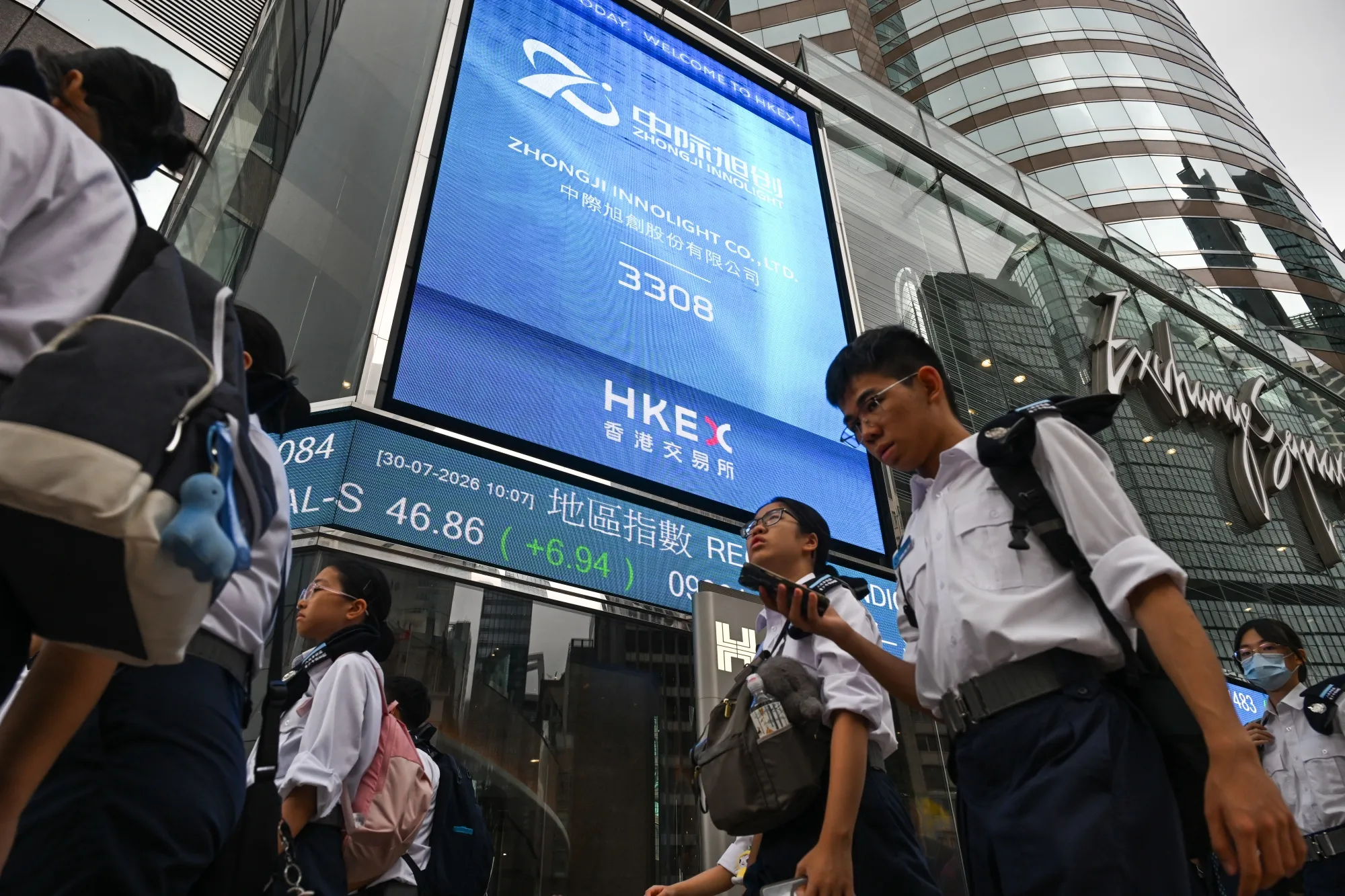
The market contraction has hit both hardware and software developers. Notable examples include the model developer Z.AI Co. and the optical module manufacturer Zhongji Innolight Co., both of which saw their previous record highs fade during the $1.7 trillion selloff across three tech indexes.1
Key takeaways
- Chinese AI stocks have lost a combined $1.7 trillion in market value since the end of June.
- The downturn follows a period of massive gains in the first half of the year.
- Three major tech-focused indexes were used to track the decline in valuation.
- Companies like Z.AI Co. and Zhongji Innolight Co. have seen their record-high stock prices retreat.
Why this matters
The $1.7 trillion rout indicates a significant shift in investor confidence regarding China's ability to quickly close the AI gap with the U.S. It transforms what was once a high-growth trade into a losing strategy for many investors.
Original reporting
1 article from 1 publication. Read the full reporting at the source.
Related stories

US and Allies Form Pact to Secure AI Supply Chains Against China

Global Markets Slump as AI Sell-Off Intensifies Despite Anthropic's Record-Breaking IPO
